
UK Casinos That Accept E-Wallets: Payment Guide
 Available in GB
Learn how wallet acceptance, withdrawals, bonus conditions and cashier compatibility can affect casino payments.

Table of Contents
- How E-Wallets Fit Into UK Casino Payments
- What “Best” Means When Comparing E-Wallet Casinos
- From E-Wallet Deposit to Casino Withdrawal
- Checking E-Wallet Acceptance Before You Deposit
- Deposit-Only Wallets and Bonus Conditions
- Payment Compatibility Across Online Casino Cashiers
- Payz and Other E-Wallet Names You May Encounter
- What E-Wallet Casino Payments Can Cost
- Currency, Deposit Minimums and Payment Limits
- Reducing Avoidable Friction Around E-Wallet Transactions
How E-Wallets Fit Into UK Casino Payments
An e-wallet is one route for moving money between your own payment account and a casino account. It sits alongside other options rather than replacing them. UK casino cashiers may offer debit cards, bank transfers, digital wallets and, at some sites, mobile payment services. The exact combination depends on the operator and the account, so the label “e-wallet casino” describes a payment option, not a standard set of services shared by every site.
The distinction matters because payment methods do different jobs. A debit card connects a transaction to a bank account or card account. A bank transfer moves money through banking services. An e-wallet holds or routes funds through a separate payment account, which you access using that provider’s service. The casino’s cashier is where these routes meet: it shows which methods the operator makes available for your account at that point.
Skrill remains a familiar name in this part of the market. A specialist casino review describes it as one of the more commonly listed deposit methods at UK-facing casino sites in 2026. That is a useful indication of its continued presence, not a guarantee that every casino accepts it or that it will be available to every customer. Neteller is another established wallet name, but its presence is also site-specific. A specialist review says Skrill and Neteller are often excluded from promotions; treat that as a reason to read the terms for the particular offer, not as a universal rule.

Jeton appears less widely. A specialist review reports that it remains available at a handful of UK online casinos in 2026. That does not make it interchangeable with Skrill or Neteller: the operator must support the provider, and the method must appear as an available option in the relevant cashier. A wallet’s general availability in the UK does not, by itself, establish that a casino accepts it.
E-wallets are therefore best understood as one layer in a broader payment choice. A casino may list Visa or Mastercard debit cards, bank transfer, and one or more wallet services. Some UKGC-licensed casinos also accept Apple Pay for deposits. PayPal is another payment name you may encounter, although its availability and any offer restrictions need to be checked against the operator’s own current terms. The method shown on a general information page may not be the method you can use for a particular transaction.

The practical difference is that a wallet introduces a separate provider account between your bank and the casino. That can give you a distinct place to manage payment activity, but it also means there are two services involved: the casino and the wallet provider. Each has its own account rules and payment controls. The casino decides which methods it supports; the provider governs the wallet account and how it can be funded. Neither side’s support for a payment route automatically confirms the other side’s acceptance.
This broader view helps avoid treating “e-wallet” as a single payment product. Skrill, Neteller and Jeton are separate services, and a cashier may support one without supporting the others. A casino might also offer card or bank-based routes while having no wallet option at all. If a wallet name appears on a casino’s general payment page, that is an indication to investigate, not proof that the route is currently open for your account.
Credit Card Ban
UK operators are prohibited from accepting credit-card payments for gambling, including funds routed through a money service business or wallets that allow credit-card funding.
The UK rules around gambling payments also shape what can be used. Remote gambling licensees serving the British market must hold a Gambling Commission licence, and credit-card payments for gambling are prohibited. That restriction also applies where credit-card funds are routed through a money service business, and operators cannot accept wallet payments where the wallet allows credit-card funds to be used for gambling. So the relevant question is not only whether a cashier displays a wallet logo, but whether the funding route complies with the rules.
For a reader considering an e-wallet online casino in the UK, the payment landscape is not a contest between wallets and every other method. It is a set of separate routes, each with different providers and operator support. Skrill has a continuing presence, Neteller is available at some sites, and Jeton is reported at a small number; none of those points guarantees acceptance at a particular casino. The useful starting point is to identify which payment route you intend to use, then establish whether that specific option is offered by the casino and permitted for the way your wallet is funded.
What “Best” Means When Comparing E-Wallet Casinos
When you choose a UK casino that accepts e-wallets, withdrawal timing is one practical detail to check. The information available here gives you a stated payout speed for each option.
Payout speed: 1-3 business days Zombillion lists a payout speed of 1–3 business days, giving you a stated timeframe to consider when reviewing withdrawals.
Payout speed: 1-3 business days SpinFormula lists a payout speed of 1–3 business days, a useful detail for you to weigh when checking payout arrangements.
Payout speed: 1-3 business days Britsino lists a payout speed of 1–3 business days, so you have a stated withdrawal timeframe to bear in mind.
Payout speed: 1-3 business days Chanze lists a payout speed of 1–3 business days, which gives you a clear timeframe to consider for payouts.
Payout speed: 1-3 business days Amunbet lists a payout speed of 1–3 business days, offering you a stated timeframe to check against your expectations.
Payout speed: 1-3 business days Dieselwin lists a payout speed of 1–3 business days, giving you a specific timeframe to consider when reviewing withdrawals.
Payout speed: 1-3 business days SlotoSport lists a payout speed of 1–3 business days, a stated payout detail for you to take into account.
Payout speed: 1-3 business days NightLuck lists a payout speed of 1–3 business days, giving you a stated timeframe to consider for payouts.
Payout speed: 1-3 business days NightWin lists a payout speed of 1–3 business days, so you can factor that stated timeframe into your review.
Payout speed: 1-3 business days WinBeast lists a payout speed of 1–3 business days, providing you with a stated withdrawal timeframe to consider.
A casino that accepts an e-wallet is not automatically the best fit for every player. The useful comparison is between the terms that affect your intended use: whether the wallet you already use is supported, whether deposits made with it qualify for a promotion, and whether the rest of the casino’s conditions suit you. A ranking can summarise preferences, but it cannot replace those checks.
Start with the payment method itself. “E-wallet accepted” is too broad to settle the question: a site may support one wallet but not another. If you intend to pay with a particular account, compare casinos on that exact method rather than treating all wallets as interchangeable. This is a question of fit, not a judgement about which wallet is inherently superior.
Compare the terms, not just the headline
Promotions can change the value of a payment option. A deposit may go through while remaining ineligible for a welcome offer or another bonus. That distinction matters if you are choosing a casino partly because of its promotion: the advertised offer and the payment method’s eligibility have to be considered together.
A specialist review reports that PayPal may be excluded from bonus eligibility, despite its popularity for speed and convenience. Treat that as a point to verify in the current offer terms, not as a rule that applies to every casino. Terms can vary between operators and promotions, so a general statement about a wallet cannot tell you whether a specific offer will apply to your deposit.
Skrill and Neteller also appear in discussions of bonus exclusions. A specialist review may flag either as ineligible for a promotion, but that does not establish a universal condition. Read the rules attached to the particular offer and look for any payment-method exclusions. If the terms are unclear, do not assume that using a wallet will preserve eligibility merely because the cashier accepts it.
This is why “best” depends partly on what you value. If the promotion matters, eligibility is a central comparison point. If you are not using a bonus, that condition may carry less weight, while acceptance of your preferred wallet can matter more. Neither preference makes a site objectively best for everyone; it changes which terms deserve attention.
Separate casino terms from personal priorities
A practical comparison can be made without ranking operators. For each casino you are considering, note whether your chosen wallet is listed, whether the relevant promotion excludes it, and whether the other offer conditions are acceptable to you. Keep these questions separate: payment acceptance concerns the available route, while bonus eligibility concerns the rules for receiving promotional value.
You should also distinguish a headline bonus from its conditions. The headline describes what is being offered; the terms determine who can receive it and how it applies. A wallet exclusion can therefore make an otherwise attractive promotion irrelevant to your planned payment method. Conversely, if you do not intend to claim a promotion, an exclusion may have no practical effect on your decision.
Avoid treating a broad label such as “e-wallet friendly” as proof that every wallet is accepted or that every promotion applies. It is a summary, not a complete set of terms. The comparison becomes clearer when you identify the exact wallet and the exact offer you would use, then judge them together rather than in isolation.
- Check if your specific wallet is supported
- Verify if the wallet is eligible for the promotion
- Compare exact terms for your intended use
- Assume all e-wallets are interchangeable
- Rely on a general “e-wallet friendly” label
- Ignore payment-method exclusions in bonus terms
There is no single standard that produces the best e-wallet casino for every reader. One person may prioritise using a familiar wallet; another may care more about whether a particular bonus remains available. A sound choice follows from checking both points against your own priorities, rather than relying on a general ranking or assuming that acceptance settles the bonus question.
From E-Wallet Deposit to Casino Withdrawal
An e-wallet deposit and a casino withdrawal are connected stages of one payment route, but they are not necessarily processed at the same speed. When you deposit, the wallet sends funds to the casino and the cashier records the method used. A withdrawal begins later, after the casino has checked the request and decided how the funds can be returned. Seeing a deposit complete does not mean a later payout will be sent immediately.
The route matters because UK anti-money-laundering rules generally require a casino to return money to the original payment source. This is often described as a closed-loop approach: if you funded your casino account through an e-wallet, the casino may direct the withdrawal back to that wallet rather than letting you choose an unrelated destination. The control helps the operator trace the movement of funds and reduces the scope for a third party to receive money through your account.
What happens between deposit and payout
The deposit establishes a payment record; it does not complete the casino’s checks on your account. When you request a withdrawal, the casino must process the request under its own procedures and confirm that it can be paid through the relevant route. The payout may therefore involve more than the wallet provider’s transfer stage: the casino’s internal approval comes first, followed by the payment being sent out.

That distinction helps explain why the time shown for a payment method may not describe the full wait. A provider can only act after the casino has approved and released the withdrawal. If approval is still pending, the request has not yet reached the point where the wallet’s own processing determines the outcome.
A specialist review identifies internal approval and account verification as factors that can extend withdrawal processing, particularly for a first payout. Treat that as a description of possible timing factors, not a fixed timetable for every casino or account. The time required depends on whether the account is fully verified and how the casino handles the request. A fast deposit, in other words, is not evidence that a withdrawal will be equally fast.
Why the original wallet may be required
The original payment source is important even if you would prefer a different destination. A casino may need to follow closed-loop rules and return funds to the e-wallet used for the deposit. If the intended destination does not match the recorded route, the payment may need further handling or checks rather than being sent there automatically.
Using one named account consistently for deposits and withdrawals is often the cleanest route. It gives the casino a direct link between the incoming payment and the payout destination. This does not remove the casino’s approval process or guarantee a particular processing time, but it avoids introducing an unrelated account into the transaction path.
UK anti-money-laundering rules generally require a closed-loop approach, meaning casinos must return funds to the original payment source used for the deposit.
Keep in mind that the wallet account and casino account should belong to the same customer. If ownership details do not match, the casino may need to establish who controls the payment method before it can complete the request. This is a basic point of continuity: the casino is checking that the person who deposited is also the person entitled to receive the funds.
Where verification fits
Verification can affect the timeline because the casino may need to confirm account information before releasing a withdrawal. If checks remain incomplete when you make your first request, the casino may ask for information or documents before it proceeds. Until those checks are resolved and the casino approves the request, the transfer to the wallet has not started.
You can reduce avoidable delays by keeping your casino and wallet details consistent and responding to verification requests through the casino’s stated process. Do not assume that a withdrawal is stalled at the wallet provider simply because the funds have not arrived: first establish whether the casino has approved and released it. Once it has, the payment has moved to the next stage, but the original-source requirement still governs where it can go.
The practical sequence is therefore straightforward: the wallet funds the casino account, the casino records the route, a withdrawal request is reviewed, verification may be completed, and approved funds are directed back through the original source. Each stage has a different role. Knowing which stage is pending makes it easier to understand why a payout can take longer than the deposit that preceded it.

Checking E-Wallet Acceptance Before You Deposit
An e-wallet appearing in a casino’s general payment information does not prove that you can use it for your own deposit. Before choosing a site on the strength of a payment option, open its cashier and check which methods are actually offered there. The cashier is the practical point of confirmation: it shows the routes the operator makes available for the transaction you are about to make.
This matters because payment eligibility is not just a question of whether a wallet brand exists. The operator must be able to accept that payment route under the rules that apply to its gambling service, and the wallet itself must be eligible for gambling payments. A method mentioned in general information may therefore be unsuitable for your intended use. If you cannot confirm the wallet in the cashier, do not assume that you can complete the deposit through it.
For UK players, the legal setting is part of that check. Remote gambling licensees serving Great Britain must hold the relevant Gambling Commission licence, wherever they are based. Online gambling is legal in the UK at licensed and regulated sites; an offshore casino without a UKGC licence is outside that system. Check that the operator holds a current licence before depositing, rather than treating a payment logo or a page describing payment methods as evidence of regulatory status.
The payment rules also limit what a cashier can accept. The regulator’s ban on credit-card gambling took effect on 14 April 2020 and has not been relaxed. A UK-licensed casino cannot accept a credit-card payment for gambling. The restriction also covers a credit-card payment routed through a money service business, so changing the route does not make the underlying credit-card funding acceptable.
Check Before Depositing
- Confirm the operator holds a current UKGC licence
- Verify the e-wallet is listed in the live cashier
- Ensure the funding route complies with credit-card rules
- Set a financial limit before the first deposit
E-wallets do not provide a workaround. Remote gambling operators cannot accept wallet payments where the wallet allows credit-card funds to be used for gambling. The relevant question is not simply whether the wallet balance is available, but whether credit-card money can be used through that wallet for the gambling transaction. If the cashier or the operator’s payment terms do not make the wallet’s eligibility clear, seek clarification before sending funds; do not try another route to get around the restriction.
Keep the check focused on the exact transaction you intend to make. Confirm that the e-wallet is presented as an available deposit method, review any payment conditions shown by the operator, and make sure the route complies with the credit-card rules. An old review, a payment-method graphic or a general list can help you identify a method to investigate, but it cannot replace the current cashier check.
A properly licensed service should also present the required account controls. Remote operators must prompt new customers to set a financial limit before their first deposit and make account-level limit controls accessible. These are separate from payment acceptance, but they are part of the checks to complete before funding an account. If a site does not appear to provide the required protections, do not treat the availability of an e-wallet as a reason to proceed.
The result is a simple decision: use an e-wallet only when the licensed operator’s cashier offers it for your deposit and the payment route is eligible under the UK credit-card rules. A familiar wallet name alone establishes neither point.

Deposit-Only Wallets and Bonus Conditions
A payment method appearing on a casino’s deposit screen tells you that it can fund an account; it does not, by itself, show that the same method can receive a withdrawal. Paysafecard makes this distinction clear: it is a prepaid voucher for deposits, so it is a deposit-only route rather than a wallet for both directions of payment.
An e-wallet may support a wider payment flow, but that capability still has to match the casino’s rules. A site can accept a wallet for deposits while requiring winnings to be sent by another permitted route. Treat the deposit option and the withdrawal option as separate features, not as a single promise implied by the word “e-wallet”. Closed-loop rules and anti-fraud checks can also affect how funds are returned.
Promotions add a separate condition. A casino may accept a payment method but exclude deposits made with it from bonus eligibility. That means a successful deposit does not establish that a welcome offer or another promotion will attach to it. Read the promotion’s payment terms before sending funds, and check whether the exclusion applies to the method itself or to a particular type of transaction.
PayPal is valued for speed and convenience, but a specialist review has reported that it may be excluded from bonus eligibility at some casinos. That is a report about particular terms, not a rule that applies across the market; the offer conditions for the account you are using are decisive. Skrill and Neteller also appear in discussions of e-wallet promotions, but their presence as payment options should not be treated as proof that every offer accepts them.
Prepaid vouchers like Paysafecard can fund an account but cannot be used for withdrawals.
Services like Skrill or Neteller can typically support both deposits and payouts.
Specific wallets that meet the operator’s terms to qualify for welcome offers or promotions.
The practical distinction is between three questions: can you deposit with the method, can the casino return funds through it, and does using it leave you eligible for the promotion? These answers can differ. A prepaid voucher can be suitable when you only need a deposit route, while a wallet with broader capabilities may be relevant if you also want it considered for payouts. Neither choice settles bonus eligibility.
Before confirming a deposit, compare the payment terms with the promotion terms. If the payment method is excluded, you may still be able to deposit, but the bonus may not be granted. If the casino’s terms do not clearly state how the method is treated, ask support for clarification before relying on the offer.
Payment Compatibility Across Online Casino Cashiers
A payment method shown on a casino’s general information page is not necessarily available to every customer at the point of payment. Treat that page as an indication of what the operator may support, not confirmation that you can use the method for your account. The cashier is the relevant check: it shows the options enabled for the transaction you are about to make.
Availability can depend on the payment route and the details associated with your account. A method might appear in a broad list but be absent from the cashier, or the cashier might show it only for deposits. Do not assume that a wallet name on a page means every wallet account or payment route will work. Check the displayed options while signed in, before you begin a transaction.

This distinction also matters for cards. UK casinos commonly accept debit cards, including Visa and Mastercard, but the brand alone does not establish that a particular card product is eligible. A specialist review may list Visa and Mastercard, yet that does not confirm current UK availability for your account. Check the cashier and make sure the card is a debit card: remote gambling operators cannot accept credit-card payments for gambling, including credit-card funding routed through a money service business.
Apple Pay illustrates why availability should be checked at the transaction stage. Some UK Gambling Commission-licensed casinos accept it for deposits, but that does not mean every licensed casino offers it, or that it will be presented to every customer. The same practical distinction applies when you are looking for an online casino that accepts e-wallet deposits: a method’s general presence does not establish that it is available in your cashier.
Use a short check before proceeding. Sign in, open the cashier, and look for the exact method you intend to use. Confirm that the option is offered for the transaction in question and that its displayed conditions fit your intended route. If it is missing, do not infer that a similarly named method will work instead. Payment services can have distinct account types or funding routes, and the cashier’s available choices are more relevant than a generic logo or list.
This approach is useful when comparing casinos that accept e-wallets in the UK, because it separates a stated payment option from one you can actually select. A site-wide list can help you identify what to investigate; it cannot establish account-level compatibility. Recheck the cashier if you return later, since the options presented at the point of payment are the practical confirmation for that transaction.
To ensure the most accurate check, sign in to your account and open the cashier to see the exact payment options enabled for your specific profile.
Payz and Other E-Wallet Names You May Encounter
A name change can make an older payment reference harder to recognise. EcoPayz became Payz in 2022, so a casino cashier or payment page may use Payz where an older description uses EcoPayz. The change identifies the same service under its newer name; it does not mean that every casino accepting the former name has updated its payment options or still supports the wallet.
When checking e-wallet casinos in the UK, treat the provider name as a starting point, not proof of availability. A general payment page may retain old wording, while the cashier may show a current option under a different label. The useful question is whether the wallet is available for your account at the point you are making a transaction. A name appearing in an older article, an archived page or a general list cannot establish that.
The same care applies to other wallet names. Skrill, Neteller and Jeton refer to distinct services, not interchangeable labels for one payment route. A casino listing one does not thereby list the others. If you have an account with a particular provider, check for that exact name in the casino’s current payment information and cashier rather than assuming that an e-wallet category covers it.
Spelling can also differ between a provider’s own materials and a casino’s interface. Look for the recognisable provider name, then confirm that the option is selectable for your account. If an old and a new name both appear, do not assume they are two separate wallets or that both are active payment choices. The provider’s rebrand explains the terminology; only the casino’s current cashier can show whether that route is offered there.

This distinction matters when you compare a casino’s payment information with what appears during account use. A label can persist after a provider changes its name, and a rebrand alone says nothing about present acceptance. Use the current name to identify the service, but rely on the live payment option—not the wording of a historic reference—to establish whether you can use it.
What E-Wallet Casino Payments Can Cost
The amount shown in a casino cashier is only one part of the cost of an e-wallet transaction. A specialist review identifies several possible charges: a fee from the casino, a fee from the wallet provider, a charge from an issuer or bank, currency-conversion costs and, where relevant, network fees. Which of these applies depends on the transaction and the services involved; a charge from one party does not rule out another.
Start by checking whether the casino adds a payment fee, then look at the wallet provider’s terms for the relevant transaction. Your bank or card issuer may also charge for funding the wallet, depending on how you add money. If a transaction involves a currency exchange, compare the amount converted with the rate applied: the provider may build a margin into that rate rather than show a separate fee.
That distinction matters because a visible flat charge is easy to spot, while a conversion spread is embedded in the exchange rate. A specialist review notes that the spread can cost more than the stated flat fee. The only useful comparison is therefore the total amount lost across the transaction, not the fee displayed in isolation.
To compare options, use the same transaction amount and currency, and include every charge that could apply: casino, provider, issuer or bank, conversion and network costs. Then compare the final amount that would reach the destination account. A method with no visible casino fee may still cost more once the wallet’s exchange rate or a bank charge is included.
Attention: Conversion spreads embedded in exchange rates can sometimes cost more than the stated flat fees shown in the cashier.
There is no single e-wallet or other payment route that is always the lowest-cost choice. The result depends on the charges and exchange rate for your particular transaction. Check the terms shown by each provider and the casino before proceeding, and distinguish a stated fee from a cost already reflected in the conversion rate.
Currency, Deposit Minimums and Payment Limits
The amount shown in your casino balance depends on the account currency, not just the amount leaving your e-wallet. If the wallet holds funds in a different currency, a conversion may occur before or during the transfer. That can change the credited amount, so check the account currency and the currency displayed at the payment stage before confirming a deposit.
A specialist review reports that GBP is supported, but that does not establish the setting for every account. Confirm the currency shown in your own cashier before your first transaction. If your casino balance and wallet use different currencies, check which provider sets the exchange rate and whether the converted amount is displayed before you authorise payment. The amount you enter and the amount credited may differ when conversion applies.
Minimum deposits can also depend on the payment method. A specialist review gives a range of £10–£20 for minimum deposits, but this should not be treated as a fixed rule across casinos or payment routes. The cashier’s stated minimum is the relevant figure for the transaction you are making. If your intended deposit is below it, the payment may not proceed; sending more than necessary can leave you with a larger balance than planned.
Maximums are separate from minimums. A payment route may impose one cap per transaction, while the casino may also set daily or monthly deposit limits. The applicable maximum can vary with the selected method and your account status, so a limit shown for one route or account should not be assumed to apply to another. If the cashier rejects an amount, check the displayed limit rather than repeatedly submitting the same transaction.
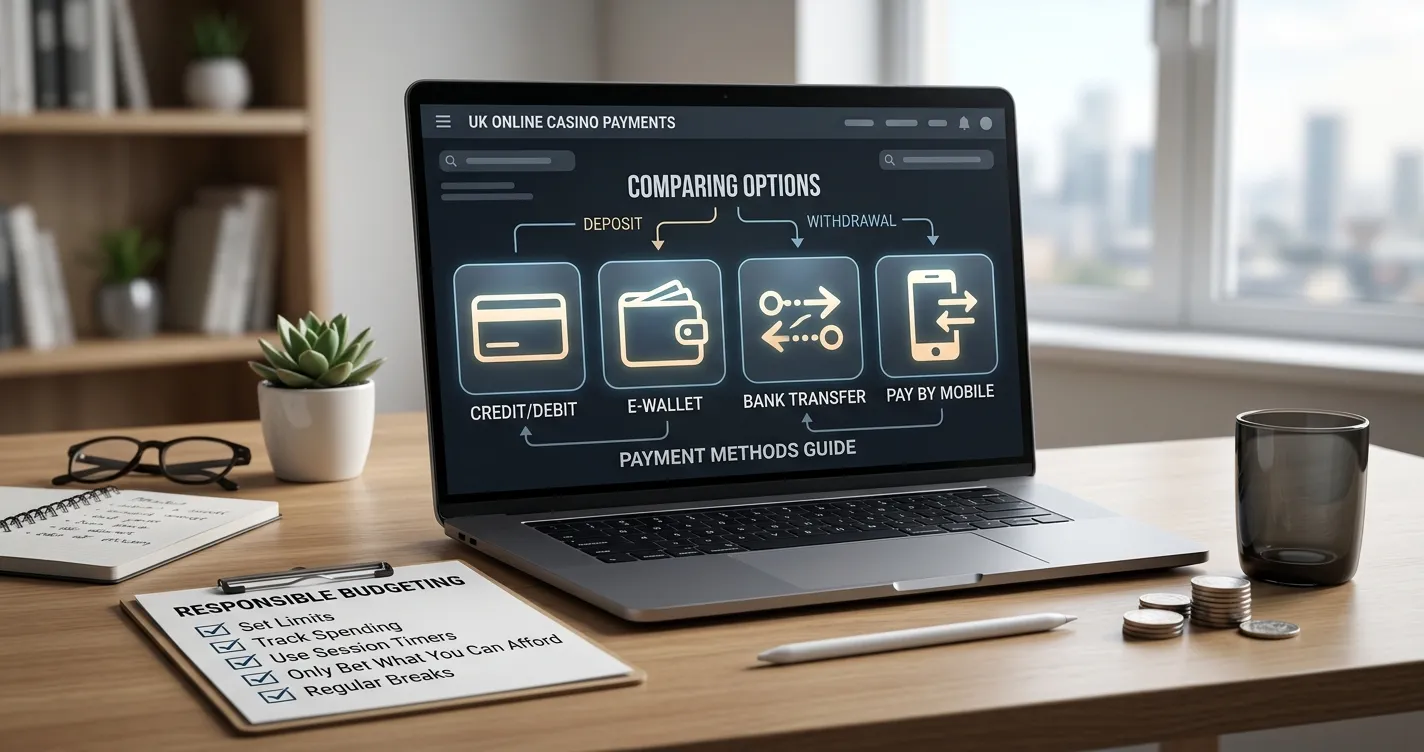
Before paying, compare three values: the casino account currency, the minimum for the selected route and the maximum currently available to your account. This establishes whether the intended amount can be sent in one transaction and whether conversion is involved. It also helps distinguish a payment-method cap from an account-level limit, which may require a different adjustment.
Reducing Avoidable Friction Around E-Wallet Transactions
When you use an e-wallet at a casino, the details attached to both accounts can affect how easily a payment is checked. If the casino account and wallet belong to the same customer, their ownership information is less likely to conflict. Matching names and other account details can therefore reduce avoidable questions about who sent the funds.
A consistent payment route can also make the transaction easier to trace. If you deposit from a wallet in your own name, keep its details accurate and use that same route where the cashier allows it. Switching between accounts or using another person’s wallet can create a mismatch that requires the casino to establish who owns the funds. This does not remove the operator’s checks, but it can avoid a basic source of friction.
Returning funds to the original payment source is a common anti-fraud and anti-money-laundering control. It helps connect a payout with the transaction that funded the account. If you request payment by a different route, the casino may ask for additional verification before processing it. The alternative is not necessarily unavailable, but it can require more evidence to confirm ownership and the destination of the funds.
Before submitting a transaction, check that the wallet account is yours and that the casino account details are consistent with it. If a payment is delayed for an ownership check, respond through the casino’s stated verification process and provide the requested information. These steps cannot determine how quickly a casino will complete its checks; they simply reduce the chance that inconsistent account details add an avoidable obstacle.
What is the fastest withdrawal method for UK casinos?
PayPal, open banking services and debit cards linked to fast payout systems are generally among the quickest options. The casino’s approval process and your account’s verification status also affect how quickly you receive funds.
Do UK casino withdrawals require verification?
Yes, verification may be needed, and first withdrawals can take longer while checks are completed. Having a fully verified account can help avoid delays.
Which method has the lowest fees?
There is no universally lowest-fee method. Compare the casino’s charges, provider or bank fees, currency conversion spread and any network costs for the payment amount you plan to use.
What is the current minimum deposit?
The minimum deposit usually starts at £10–£20, depending on the payment method.
Are fast casino withdrawals guaranteed?
No. Withdrawal speed can be affected by the casino’s internal approval process and whether your account is fully verified.
Why must withdrawals return to the deposit method?
Returning funds to the original payment source is a common anti-fraud and anti-money-laundering control. An alternative route may require additional verification.
Why can a fast payout casino still delay my withdrawal?
A casino’s internal approval process can add time, and a first withdrawal may take longer while verification is completed. Your account’s verification status also affects payout speed.
Written by the editors at Fortune Casino.