
3-Reel Slots in the UK: Layouts and Play
 Available in GB
See how reel count, visible positions, volatility and game rules shape play without treating slot features as a sign of better odds.

Table of Contents
- How Reel Count Changes the Shape of a Slot
- Playing Three-Reel Slots Online in Britain
- Real-Money Play: Limits and Licence Checks
- Classic Three-Reel Slots and Their Five-Reel Counterparts
- How to Play a Free Three-Reel Slot
- Fruit-Style Three-Reel Games
- What Slot Volatility Means for Your Session
- Reading Slot Features Without Assuming They Improve Your Odds
- Playing in a Browser and Understanding the Odds
- Traditional Play and the Limits of Slot Strategy
How Reel Count Changes the Shape of a Slot
A three-reel slot has three vertical reels arranged side by side. Each reel displays symbols, and a spin changes the symbols shown in the game window. The reel count describes this horizontal arrangement; it does not, by itself, tell you how many symbols are visible on each reel or how a winning combination is evaluated.
To understand the shape of the game, separate the reels from the positions visible on them. A game window may show more than one symbol vertically on a reel, but the reel remains a single moving column. The symbols that matter are determined by the game’s rules, not simply by counting everything visible on the screen. So a three-reel layout is not necessarily a single row, and three reels do not automatically mean there is only one way for a result to count.
The number of reels affects the possible arrangements. With three columns, a result is formed from symbols appearing across a comparatively compact layout. A five-reel game has two additional columns, giving it a wider structure. That changes the space in which combinations can appear, but reel count alone does not tell you which combinations pay or how much a particular result is worth. Those details belong to the individual game’s rules.
When choosing reel slots in the UK for 2026, you can use this list as a starting point and consider the payout information available for each operator.
Payout speed: 1-3 business days You can factor in Zombillion’s stated payout speed of 1–3 business days when considering it for reel slots.
Payout speed: 1-3 business days SpinFormula lists a payout speed of 1–3 business days, which you can keep in mind as you explore your options.
Payout speed: 1-3 business days You can take Britsino’s stated payout speed of 1–3 business days into account when assessing it for reel slots.
Payout speed: 1-3 business days Chanze’s listed payout speed is 1–3 business days, a detail you can consider when making your shortlist.
Payout speed: 1-3 business days You can note Amunbet’s stated payout speed of 1–3 business days while looking at reel-slot options.
Payout speed: 1-3 business days Dieselwin lists payouts at 1–3 business days, giving you a stated timing detail to consider.
Payout speed: 1-3 business days You can factor SlotoSport’s stated payout speed of 1–3 business days into your search.
Payout speed: 1-3 business days NightLuck’s listed payout speed is 1–3 business days, which you can bear in mind when considering it.
Payout speed: 1-3 business days You can take NightWin’s stated payout speed of 1–3 business days into account as you explore the list.
Payout speed: 1-3 business days WinBeast lists a payout speed of 1–3 business days, a detail you can consider when reviewing your options.
The bet structure can also differ. In a five-reel slot, a bet can be applied across all five reels. That means the amount associated with a spin may cover the full set of columns rather than treating the layout as a three-reel arrangement. When comparing games, check how the displayed bet relates to the reels and the game’s winning rules; the same-looking bet amount does not necessarily describe the same structure.
A useful way to read a slot is to treat its layout and its evaluation rules as separate parts. First count the reels: that tells you how many columns make up the main arrangement. Then identify the positions and paths that the rules use to assess a result. A game with three reels can still have rules that are more involved than its compact appearance suggests, while a five-reel layout is not automatically more complex in every respect. The screen’s shape is only one part of the mechanism.
This distinction helps when comparing three-reel slots with 5 reel slot games. The shorter layout is immediately visible, but it does not settle questions about the bet, the winning combinations or the game’s other mechanics. A five-reel slot can involve a bet across all five reels; a three-reel game should be read according to its own stated structure rather than assumed to work the same way on a smaller grid.
When you inspect a game, use “three-reel” as a description of its layout, not as a complete explanation of how it plays. Count the vertical reels, then consult the rules for how symbols are assessed and how the bet is applied. That gives you a clear basis for comparing formats without assuming that every compact game follows one universal pattern.

Playing Three-Reel Slots Online in Britain
A three-reel slot can be played online through a game interface displayed in a browser. The basic sequence is simple: the game shows its reels and controls, you choose an available stake, then start a game cycle. The reels animate and stop, and the game displays the result. The online version may look like a physical machine, but its controls and timing are governed by the software rather than by a lever or button on a cabinet.
Before you start, allow the game to finish loading and check that its controls respond. A delayed display or an incomplete animation can make it unclear whether a spin has started or finished. Avoid sending repeated spin commands while the game is still processing an earlier one. The interface should indicate when it is ready for another cycle; waiting for that state helps you avoid confusing a pending result with a new spin.
How a spin proceeds online
A spin is a game cycle, not merely the visible movement of the reels. It begins when you submit the play command and continues until the game has produced and displayed its result. The animation represents that process, but the outcome is determined by the game software. The stopping position on the screen is how the result is presented; the animation does not provide a reliable signal that another outcome is due.
In Britain, an online slot cycle must last at least 2.5 seconds from its start before the next cycle can begin.
In Britain, an online slot cycle must last at least 2.5 seconds from its start before the next cycle can begin. This sets a minimum pace, not a requirement to keep playing continuously. You can wait between spins, inspect the displayed result or leave the game. If the interface disables the spin control while a cycle is underway, that reflects the need for the current cycle to complete before another can start.
The timing rule also explains why an online session may feel different from using a physical machine. The software controls when a new cycle can begin, and an animation may take longer than the minimum. A slower display does not mean that a spin has been paused for you to influence its result. Nor does a quick response from a button permit the next cycle to start before the required interval has elapsed.
Why autoplay is unavailable
Autoplay is banned for online slots in Britain. You must initiate each spin yourself; a control that starts a sequence of spins without a fresh command for each one is not permitted. This changes the rhythm of play: the game cannot simply continue through a chosen run while you watch. Each cycle has to finish, and you decide whether to request another.
Manual control does not change the slot’s underlying operation. It gives you a point at which to stop, but it does not make the results predictable or turn a previous outcome into evidence about the next one. Treat the spin button as a command to begin a new cycle, rather than as a way to adjust what the reels will show.

What can affect a browser session
A browser session depends on the game interface communicating with the service that runs it. If a page is still loading, the controls may not yet be available. If a connection drops during a cycle, the screen may stop updating even though the game has received the command. In that situation, do not assume from an animation alone whether the spin registered. Wait for the game to reconnect and display its status before taking another action.
The same care applies when changing pages or closing a tab. Leaving while a cycle is in progress can interrupt what you see, even if it does not undo the game’s recorded result. If you return and the interface shows a completed round or a message, read it before continuing. This is a practical way to keep track of the session, not a method of changing an outcome.
Online three-reel games may use familiar machine-style controls, but labels and layouts vary by title. Identify the stake setting and the control that starts a single spin before playing. A three-reel layout does not itself tell you how every button works, and a design that resembles a traditional slot does not mean the online game follows the physical machine’s operating rhythm.
Whether you are looking at a classic-looking title or another three-reel game, the key session mechanics remain distinct from its visual style: wait for the current cycle to finish, start each spin manually, and give the interface time to show the result. These rules govern how online slot play proceeds in Britain; they do not depend on the number of reels shown.
- Wait for the current cycle to finish
- Start each spin manually
- Give the interface time to show the result
- Send repeated spin commands while processing
- Use autoplay to start sequences of spins
- Assume a slow display means a spin is paused
Real-Money Play: Limits and Licence Checks
With real-money 3 reel slots, your balance is funded with money you can lose, and any winnings are credited as real funds under the casino’s rules. A free-play version works differently: its credits are fictional, and it does not pay out money. The two modes may look alike on screen, but only real-money play involves a deposit and financial consequences.
Before depositing, check that the casino holds a current UK Gambling Commission operating licence. The Commission regulates commercial gambling in Great Britain, including remote gambling offered to people there, even when an operator’s equipment is located elsewhere. It issues operating licences to businesses; personal licences apply to individuals carrying out specified roles. For a player choosing a casino, the relevant check is the business’s operating licence.
Use the Commission’s public register to verify the operator and its licence details rather than relying only on a badge or claim displayed on the casino’s own site. A name that looks similar is not enough: confirm that the register entry corresponds to the business offering the gambling service. If you cannot establish that the operator holds the relevant licence, do not deposit. A casino’s appearance, the age of its games or its use of familiar old-fashioned 3 reel slots does not establish that it is licensed.

There is an age-based limit on the stake for an online slot game cycle in Great Britain. A specialist gambling review describes the limit as £2 for customers aged 18 to 24 and £5 for those aged 25 or older. These figures concern the total stake in a game cycle, not a recommended amount to spend or a guarantee about what a particular game will accept. They also do not mean that every game uses the same stake setting: check the amount shown before you start a cycle.
Age verification is part of the deposit process. Operators must verify a customer’s age before allowing funds to be deposited into a gambling account. Being able to open a game or see its interface should not be treated as proof that you are cleared to deposit. If you are considering play, distinguish access to a game from permission to fund an account.
The licence check and the stake limit answer different questions. The limit concerns how much may be staked in a slot cycle, with the applicable amount depending on age. The licence check concerns whether the business is authorised to offer gambling to consumers in Great Britain. Meeting one condition does not replace the other: a permitted stake does not make an unlicensed casino acceptable, and a licensed casino does not remove the stake limit.
This applies whether the game is presented as a fruit machine 3 reel slot, a retro title or a newer release. Its visual style does not change the operator’s licensing obligation or the applicable slot stake limit. Likewise, playing a free version is not real-money gambling: demo credits are not a deposit, and no payout is awarded. If you move from free play to a funded session, treat that as a separate decision and verify the operator’s licence before depositing.
Licence Check
Verify the operator’s operating licence via the UK Gambling Commission’s public register before depositing; do not rely solely on a badge or claim on the casino’s site.
Classic Three-Reel Slots and Their Five-Reel Counterparts
A classic three-reel slot is defined first by its layout: three reels form the visible playing area. The label describes the number of reels, not a complete set of rules. It does not, by itself, tell you how a game handles winning combinations, what symbols it uses or which features are available.
That distinction matters when you compare a traditional-looking design with a newer one. Familiar symbols, simple graphics or a restrained interface may suggest an older style, but appearance alone cannot confirm how the game works. A slot can borrow the visual language of a classic machine while using its own rules. To understand a particular game, check its paytable and information screen rather than relying on its title or artwork.
What the reel count tells you
With three reels, the game presents three reel positions across the play area. A five-reel slot presents a wider arrangement, and a bet can be applied across all five reels. That difference changes the layout a player sees and the space available for combinations, but it does not establish that one format is simpler, more generous or easier to predict.
The word “classic” is therefore useful as a broad description, not as a guarantee of uniform mechanics. Two classic three-reel slots can differ in their symbols, winning patterns and other rules. Likewise, a five-reel game is not defined only by a more elaborate screen: its exact operation depends on the rules of that individual title.
Comparing formats without assuming the rules
When comparing classic slots with video slots, separate the visible format from the game’s specific mechanics. Reel count is an observable feature. The rules that determine which arrangements count as wins must be checked separately. A three-reel layout does not necessarily mean that a game has only one way to form a winning combination, just as a five-reel layout does not tell you which features it includes.

This is also why “classic” and “video” are not reliable substitutes for a rulebook. They can describe broad design approaches, but they do not specify every detail. If you want to play a three-reel slot, begin by confirming the reel layout, then read the game’s own explanation of its combinations and features. That gives you a more precise comparison than judging by the age or style the artwork appears to evoke.
The same approach applies when choosing among classic three-reel slots. Rather than treating the category as a single game type with identical behaviour, inspect each title on its own terms. The shared feature may be the three-reel arrangement; the rest can vary. A familiar appearance may help you recognise the intended style, but it is not evidence that the game follows the rules of another slot you have seen.
In practical terms, “three-reel” answers a narrow question about the layout. “Classic” signals a style, but leaves the game’s detailed rules open. A five-reel counterpart differs in the number of reels and can have a bet applied across all five; that does not make every five-reel title mechanically alike either. Treat the labels as starting points for comparison, then use the individual game rules to establish what each layout actually does.
How to Play a Free Three-Reel Slot
Free play lets you try a slot without staking real money. The credits shown in a demo are fictional: they are there to let you operate the game, not to represent funds in an account. A balance that rises during a session is not a cash balance, and no payout is awarded when you stop. You cannot withdraw demo credits or convert them into real-money winnings.
To start, open a three-reel slot that offers a free-play mode and select that mode on the game screen. The wording and location of the control vary by game. Check that the display identifies the session as free play before spinning; a demo and a real-money version may look similar, but they do not use the same kind of balance. If the game asks you to choose a stake, use the demo controls to select an available amount of fictional credit. That selection changes the demo balance used by the game, not a deposit.

Once the reels are ready, activate a spin using the on-screen control. The symbols stop, and the game checks the result against its rules. If a combination matches a paying pattern, the demo balance may change according to the game’s displayed paytable. That is an in-game result only. It does not show that money has been won, and a favourable run in a demo does not establish what a later real-money session would return.
You can repeat the process to see how the controls behave and how the game presents results. Before spinning, look for the paytable or help panel. It explains which symbol combinations count and how the game records a result. This is more useful than treating a rising demo balance as evidence that a particular game is among the best-paying three-reel slots: a short free session cannot establish that, and its credits have no cash value.
In Britain, online slot games must not allow spins to run faster than the permitted cycle timing: at least 2.5 seconds must pass from the start of one game cycle before the next can begin. Free play does not remove that requirement. Let each spin complete before starting another; the game controls the timing rather than letting you make cycles occur more quickly.
Keep the boundary between trying a game and gambling clear. A demo does not require you to deposit in order to make its fictional credits real, because they cannot become real. If you move from a demo to real-money play, that is a separate activity with a different balance and actual stakes. Do not interpret demo results as a method for predicting how to win on a three-reel slot: the session shows the interface and rules in operation, not a way to secure a payout.
Fruit-Style Three-Reel Games
Fruit-style games use familiar machine imagery—such as cherries, lemons, bells, bars and sevens—to make their theme immediately recognisable. In a three-reel version, that visual language is paired with a compact layout. The symbols are not just decoration: the game’s rules determine which arrangements count as wins and what each qualifying arrangement pays.
Attention Do not assume that every fruit-themed game follows the same rules or that familiar symbols like cherries and sevens have identical values across different games.
Do not assume that every fruit-themed game follows the same rules. A cherry might be a standard paying symbol in one title and have a different role in another. Some games use special symbols or extra features, while others keep the presentation close to a basic reel layout. The title and artwork indicate the style, but the paytable and rules explain how the game actually behaves.
Before spinning, look at the paytable for the symbol combinations and their listed payouts. Check whether a combination must appear on a particular line, whether symbols need to land in a specific order, and whether a special symbol changes the result. A row of matching fruit across the visible reels may look like an obvious win, but only the game’s stated rules establish whether it qualifies. The same applies to bars and sevens: their familiar appearance does not guarantee identical values across different games.
The display can also affect how easy the rules are to read. Some games show the active line or highlight a winning arrangement after a result; others rely more heavily on the paytable. Treat those cues as explanations of the result, not as evidence that a symbol is more likely to appear. A bright animation can draw attention to a win, but the payout itself is determined by the game’s rules.
Fruit-machine styling can appear in games with different layouts and features, so the theme alone does not establish how many reels or paylines a title has. Check the game information rather than inferring its mechanics from its artwork. That distinction matters when comparing a simple-looking fruit game with another title that uses similar symbols but adds extra screens, bonus mechanics or more complicated rules.

For a useful comparison, focus on the actual combination table and the way wins are formed. Two games may both look like traditional fruit machines yet give different payouts for similar-looking arrangements. Conversely, a game with a modern interface may retain familiar fruit symbols and straightforward rules. The visual style helps identify the genre; the paytable tells you what each result means.
What Slot Volatility Means for Your Session
Volatility describes the pattern of a slot’s returns, not whether it is favourable overall. A lower-volatility game tends to return smaller amounts more often. A higher-volatility game tends to pay less often, with larger amounts when a win occurs. Neither pattern tells you what will happen on a particular spin.
That difference affects how a session feels. With lower volatility, you may see winning combinations regularly, but each may return only a small amount. Across most low-volatility titles, winning combinations typically appear every three to six spins on average. This is a description of a broad pattern, not a schedule: it does not mean a win is due after a set number of unsuccessful spins.
Higher volatility can produce longer stretches without a win, followed by a larger return. That larger return is not guaranteed to arrive during your session. If you stop before it does, your results may look very different from the game’s long-run pattern. Short sessions are especially sensitive to the order in which outcomes occur.
When comparing 3 reel slot machine odds, keep volatility separate from the chance of a particular outcome or the game’s overall return profile. Frequent small wins do not, by themselves, show that a game gives more back than it takes. A win can return less than the stake that led to it, and the size and frequency of wins are separate from the game’s mathematical expectation.
Understanding Volatility
Volatility describes the pattern of returns: low-volatility games tend to return smaller amounts more often, while high-volatility games pay less often but with larger amounts when a win occurs.
The same distinction applies when you try free 3 reel slot machines or look for free three-reel slots for fun, including versions offered without registration. A free version may help you observe how often different outcomes appear, but a short run cannot establish a reliable pattern for future play. Volatility is a feature of the distribution of outcomes, not a promise attached to each session.
Over enough sessions, any game with a positive house edge has a negative mathematical expectation for the player, however gradually its losses may appear. Lower volatility can make returns seem steadier because smaller wins occur more often; it does not remove that disadvantage. Higher volatility changes how unevenly results may arrive, not the underlying expectation. Treat volatility as a guide to the shape of possible results, rather than a way to predict a win or extend a session safely.
Reading Slot Features Without Assuming They Improve Your Odds
A slot feature describes how a game is arranged or how it presents a result. It does not, by itself, tell you how likely a winning result is. To read a game accurately, separate its visible components: the reels, the paylines and any bonus mechanics.
The reels display symbols as each spin resolves. A three-reel layout gives you fewer reel positions than a five-reel game, but reel count alone does not explain how a win is formed. The paytable sets out which symbol combinations pay and what conditions apply. Check that information rather than inferring rules from the game’s appearance or title.

A payline is a route across reel positions on which a qualifying symbol combination may count. A simple layout may have a small set of lines; a more elaborate game may offer many. More lines can change which combinations are eligible to pay, but the number of lines is not a measure of how favourable the game is. You need the paytable and the game’s stated rules to understand what a line does.
Bonus mechanics add another layer. A feature might alter how a win is calculated or provide a separate round, but its presence does not establish that wins are more likely or that returns are higher. Read the triggering conditions and the way any award is calculated. Treat promotional wording as a description to verify against the rules, not as evidence about the outcome.
Low-volatility games provide a useful contrast with a compact three-reel layout. They typically use five reels and at least twenty-five paylines, with fixed jackpot amounts rather than progressive pools. Their bonus rounds may apply multipliers to wins accumulated during the feature. These are design characteristics: they tell you how the game is structured, not whether a particular spin will win.
That distinction matters when comparing 3 reel slot features with those of a more layered game. A three-reel title may look simpler, while another game may show more lines and bonus stages. Neither visual complexity nor a feature label is enough to judge the chance or size of a return. Use the paytable and rules to identify what each component changes; do not treat additional mechanics as proof of better odds.
Check Slot Mechanics
- Identify the number of reels
- Review the paytable for symbol combinations
- Determine the active paylines
- Read the triggering conditions for bonus mechanics
Playing in a Browser and Understanding the Odds
A three-reel slot that runs in a browser does not need to be installed on your device. The browser is simply the route by which you access the game: its reels, controls and result are displayed online rather than through a downloaded program. That can make a game easier to open on different devices, but it does not tell you how likely a win is.
The same distinction matters when you find a free version. The fact that a game can be opened without a deposit describes how you access it, not the probability of its outcomes. Nor does a three-reel layout, by itself, reveal the odds. Reel count is a visual and mechanical feature; the chances of combinations and the returns attached to them depend on the game’s rules and payout information.
To assess a 3 reel slot’s odds, look for the game’s published information rather than judging by its appearance or the way it is delivered. A bright interface, familiar symbols or frequent small wins do not establish that the game is more favourable. If the relevant information is not available, you cannot calculate the odds from the browser screen alone.
A game’s mathematical expectation also needs to be kept separate from how individual sessions feel. Where a game has a positive house edge, its expected result is negative for the player over enough sessions. That remains true whether the losses arrive gradually or are concentrated in less frequent outcomes. A run of wins does not, on its own, show that the underlying odds have changed.
So, choosing no-download play is an access decision, not an odds assessment. The browser tells you how the game is being delivered; the game information tells you what its rules and returns are. Treating those as separate questions makes it easier to compare games without assuming that a free version or a simple-looking layout changes the mathematical terms.
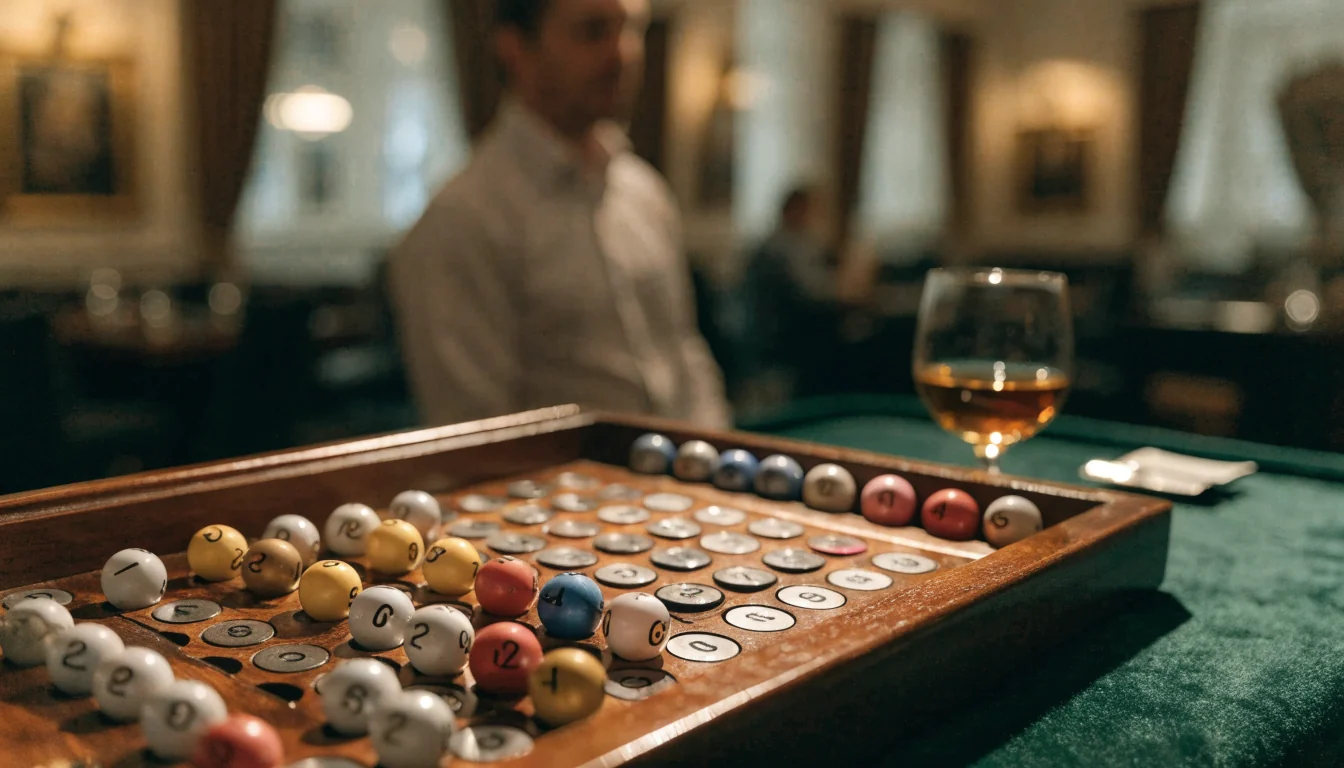
Traditional Play and the Limits of Slot Strategy
A traditional approach to three-reel slots can describe how you choose to play, not a method for changing the game’s mathematics. You might prefer a simple layout, keep your decisions consistent, and stop when you reach a limit you set in advance. These choices can make a session easier to manage, but they do not make a losing game profitable over time.
A strategy can govern your behaviour: which game you select, how much you choose to stake, and when you end a session. It cannot tell you which spin will win. Treating a sequence of past results as a signal for the next result also does not establish that a particular outcome is due. A plan is useful when it prevents impulsive changes; it is not a prediction tool.
The mathematical distinction is between controlling your actions and controlling the result. If a game has a positive house edge, its expected outcome for the player is negative over enough sessions. Losses may accumulate gradually, but that does not remove the disadvantage. Nor does a run of wins prove that a strategy has changed the underlying expectation.
That matters when comparing a disciplined routine with a supposed system. Keeping the same stake, changing it after a loss, or stopping after a win may affect how long you play and how much you expose to risk. None of those decisions reverses the house edge. A shorter session can end before the long-run expectation becomes visible, but it does not alter that expectation.
For a traditional three-reel game, keep the purpose of a strategy narrow: decide what you are comfortable spending, avoid treating previous spins as instructions, and stop when your chosen boundary is reached. If the game’s rules or payout information are unclear, resolve that before playing rather than relying on a staking pattern to compensate. Strategy can structure a session; it cannot turn chance into a dependable source of returns.
Published by the Fortune Casino team.